As a wellbeing practitioner, I often hear people talk about wanting a stress-free life.
It’s an understandable wish. When we’re feeling overwhelmed, exhausted or under pressure, removing stress altogether can seem like the obvious solution.
But I’m not convinced a stress-free life is the goal.
In fact, the pursuit of a stress-free life can sometimes become a source of stress in itself. If we expect life to feel calm, comfortable and predictable all the time, then normal challenges can start to feel like signs that something is wrong.
The reality is that life will always involve uncertainty, setbacks, difficult conversations, change and periods of pressure. We cannot remove every challenge, nor would we necessarily want to.
Some of the most stressful times in my life have led to the greatest rewards and achievements – Becoming a mum and training for marathons and physical challenges – two of the key things that spring to mind immediately!
Building businesses and taking on roles that challenged me to learn and grow.
Many of the qualities we value most in ourselves are developed through facing difficulty, not avoiding it.
Confidence is a good example.
Confidence is often treated as something we need before we take on a challenge. In practice, it tends to work the other way around. Confidence develops when we face situations that feel uncomfortable, uncertain or demanding and discover that we can cope with them.
I’ve rarely gained confidence by staying within my comfort zone. The experiences that have strengthened it most have been the ones that initially felt difficult: becoming a mum, training for demanding races, building businesses and taking on roles that required me to learn as I went. None of them felt easy at the time, but each provided evidence that I could cope with more than I first believed.
That pattern is something I’ve seen repeatedly, both in my own life and in the people I work with.
Many people are not struggling simply because life is too stressful. They are struggling because they haven’t yet learned to distinguish between productive stress and destructive stress.
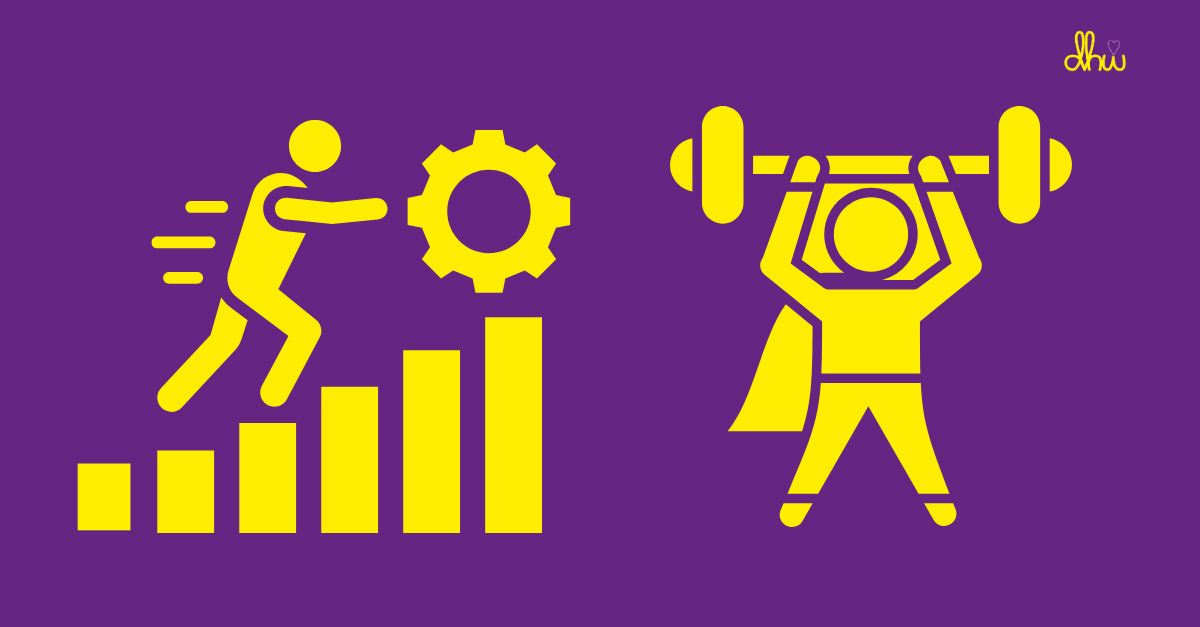
Productive stress stretches us. It challenges us to learn, adapt and grow. It may feel uncomfortable, but it remains manageable. There is effort, but there is also recovery. There is pressure, but there is also a sense of purpose.
Destructive stress is different.
It occurs when demands consistently exceed our ability to cope. Recovery becomes difficult. We feel trapped rather than challenged. Pressure becomes relentless, and our physical and mental wellbeing begin to suffer.
The goal, therefore, is not to eliminate all stress from our lives.
The goal is to develop the awareness and resilience to recognise the difference.
Resilience is often misunderstood as simply pushing through regardless of the cost. In reality, resilience is much more nuanced than that.
It involves recognising when a challenge is helping us grow and when pressure has become unsustainable.
It means knowing when to persist, when to recover, when to seek support and when to make changes.
Whilst we can’t control everything that happens to us, we often have more influence than we initially realise. The choices we make, the boundaries we set, the conversations we have, the support we seek and the habits we develop can all have a significant impact on how we experience and respond to pressure.
This applies just as much in organisations as it does in our personal lives.
The healthiest workplaces I’ve seen are not those where people never experience pressure. They are the ones where people understand what is expected of them, feel supported by their managers, are encouraged to take breaks, and have opportunities to learn and develop.
The same is true for young people.
As parents, educators and employers, we cannot remove every challenge they will face. What we can do is help them develop the confidence, emotional awareness and practical skills to deal with those challenges when they arise.
Growth requires challenge.
Wellbeing requires recovery.
BOTH MATTER.
If you’re feeling under pressure at the moment, it may be worth asking yourself a different question.
Not, “How do I get rid of all stress?”
But:
“Is this challenge helping me grow, or has it become unsustainable?”
The answer may help you decide whether you need new skills, clearer boundaries, additional support, or a change in circumstances.
Life will always contain pressure, uncertainty and challenges.
Rather than asking how we can remove them completely, perhaps a better question is how we can develop the confidence, skills and support to deal with them when they arise.
Because confidence is rarely built when life is easy.
More often, it is built when we discover that we can handle things we once thought were beyond us.